


Frontline Perspectives on Heavy Industry with Alexander Diack
A senior HSSE professional on what still keeps the industry up at night.
Aug 11 2026Alexander Diack is a senior HSSE professional with more than three decades in some of the world's most demanding industrial environments, from the UK North Sea, where he started with BP in 1989, to Qatar and Oman, where he has led safety across major energy and utilities projects. We spoke with him about how heavy industry has changed over his career, what still keeps HSSE leaders up at night, and where the systems meant to prove who is safe to work still fall short.

Q: With that breadth of experience across the industry — we would love to start with your perspective Alex. How have you seen the heavy industry landscape shift over the years, and what changes have had the biggest impact on how the industry operates today?
Thirty-five years is a long time to watch an industry evolve, and the changes I have seen have been significant.
When I started out in the North Sea in 1989, safety was largely procedural, you mainly followed the rules, you ticked the necessary boxes, and that was generally considered sufficient. The culture was hierarchical, hazard awareness was often reactive, and incident investigation was more about assigning blame than understanding systemic failure.
What has changed most profoundly is the shift from compliance to culture. The industry has moved, not always uniformly, and not without setbacks, toward recognizing that sustainable safety performance comes from leadership behavior, workforce engagement, and genuine risk ownership at every level. That shift accelerated after the major catastrophic events such as the Piper Alpha disaster, which forced the industry to confront what procedural compliance alone could not prevent.
Working across as many locations, you develop a strong appreciation for how context shapes safety culture. There is no single approach that works everywhere, and those who don't recognize that tend to struggle.
The industry today is more data-driven, more accountable, and broadly safer than it was when I started. But complacency remains the enemy.
Q: Heavy industry has well-established processes for verifying contractors before they come on site. But as projects get bigger and more complex, with more contractors involved, how do the current contractor's verification systems and processes hold up?
The systems hold up reasonably well under normal conditions, but they come under significant strain as project scale increases, and I think the industry is broadly aware of that without always confronting it.
Most major operators and EPC contractors now use structured contractor management platforms that capture qualifications, medical fitness, induction records, and site access permissions. But the vulnerability isn't usually in the system design, it's in the verification layer. A platform can record that a certificate exists. What it struggles to confirm is whether that certificate is genuine, current, and reflective of the individual's competency.
The most common failure mode isn't outright fraud, although that does happen, it's outdated qualifications that nobody has actively flagged. A worker completes a training course, it gets logged, and then it quietly expires while the worker continues operating. I've come across this more than once over the years, riggers, equipment operators etc., where the license or certification has lapsed without anyone catching it at the point the person went back on the tools. It's rarely deliberate, people simply lose track of renewal dates, but nothing in the process was built to catch it at the moment it matters.
The consequences when this goes undetected can be severe. If an incident occurs and investigation reveals the involved worker held an expired or misrepresented qualification, you are looking at regulatory scrutiny, reputational damage, and serious questions about the robustness of the entire assurance framework.
But I'd also say this, better systems are only part of the answer. I have seen organizations with very sophisticated contractor management platforms that still had serious incidents, because the culture around verification was complacent. People were treating the system as the assurance rather than as a tool to support assurance.

Q: Permit to Work systems are increasingly connected to digital credentials and training records. What does that integration look like in practice today? How well does credential status connect to operational permissions?
The integration exists, but in most environments I have worked in, it is partial at best. Electronic PTW systems have advanced considerably, permit creation, approval workflows, area authority sign-off, and isolation management are now commonly handled through platforms that provide a genuine audit trail. That is a real improvement on the paper-based systems I worked with earlier in my career.
Where the integration tends to break down is at the credential verification layer. A permit approver can see that a worker is on site and has been through induction. What they often cannot see, in real time, is whether that worker's specific qualifications and the associated competencies for the task in front of them are current and valid. Those records typically sit in a separate system, an HR platform, a training management database, or a contractor portal, and the two don't always talk to each other effectively. The permit gets issued based on what the approver knows or assumes, rather than what the system has actively confirmed.
There is definitely appetite in the industry for better real-time visibility, particularly among HSE teams who understand the risk exposure that gap creates. The challenge is that appetite at the operational level doesn't always translate into investment at the organizational level. Integrating these systems requires commitment across multiple functions — IT, HR, operations, and HSE — and that alignment is harder to achieve than the technology itself.
It shifts the system from reactive to genuinely preventive, and it reduces the burden on HSE teams who currently spend considerable time manually cross-checking records that should be connected automatically.
Q: When a qualified contractor moves from one operator or one site to another, how much of the credential verification must start from scratch — and where is the biggest opportunity to reduce that repetition?
In most cases, the answer is almost entirely from scratch, and that is a persistent inefficiency in the industry.
A contractor who has been fully verified, inducted, and working productively on one major project will typically arrive at the next operator or site and find that none of that verified history is recognized. They go back to the beginning, documents resubmitted, qualifications re-checked, medicals repeated, inductions sat through again. From the worker's perspective it is frustrating. From the project's perspective it is costly and slow. And from a risk management perspective, the repetition doesn't necessarily make anyone safer, it just consumes time and resource that could be better spent.
The problem is most acutely felt during mobilization. When you are trying to mobilize a large workforce quickly, the onboarding bottleneck is real, and it has a direct operational cost. Delays in getting qualified people through the verification process and onto tools translate into schedule pressure, which in turn creates its own risk dynamic.
The fundamental problem is that verified credentials belong to the operator who verified them, not to the worker who earned them. There is no portable, trusted record that travels with the individual. Every operator starts from zero because there is no common infrastructure that allows them to do anything else.
If a worker's qualifications could be verified once, to a recognized standard, and that verification accepted across operators and sites, the mobilization picture changes considerably. Project readiness improves, duplication is eliminated, and HSE teams can focus on assurance rather than administration.
For me personally, accepting that verification on my own sites would need to rest on two things. First, verification against a recognized, independent competency standard, not just another operator's word that it was done properly. Second, a clear audit trail showing when, how, and against what criteria the credential was verified — task-level competency, not just a certificate on file.
However, we should consider that the reason operators repeat verification isn’t entirely irrational, they want assurance that meets their own standards, in their own context, for their own liability framework. Convincing them to accept another operator's verification requires a level of industry-wide trust and standardization that may prove difficult to establish in practice.

Q: When something goes wrong on a heavy industry site, the investigation that follows often needs to answer questions like who was there, were they authorized to be there, and did they have the right qualifications for the task. How straightforward is it in practice to piece that picture together after an incident?
In my experience, it is rarely straightforward, and the effort required to piece that picture together is often underestimated until you are actually in the middle of an investigation.
The questions you describe, who was there, were they authorized, did they have the right qualifications, sound like they should be simple to answer. In practice, assembling that information typically means pulling records from multiple systems that weren't designed to work together. Access logs, permit records, training databases, and contractor management platforms all hold fragments of the picture. Getting them to tell a coherent story takes time, and in the critical early stages of an investigation, time matters.
The more uncomfortable truth is that qualification checks at the task level are often less robust than organizations assume. Site entry checks are generally well controlled, you either have a valid access card or you don't. But whether the individual who passed through the gate held the specific competencies required for the specific task they were assigned to that day is a much harder question to answer with confidence after the fact. In many cases the honest answer is that it wasn't checked at that level of granularity, and the records don't exist to confirm it either way.
That gap has real consequences for root cause analysis. Investigators end up working with incomplete information, which means findings and recommendations may not fully reflect what actually happened. It also creates legal and regulatory exposure when the records that should provide clarity simply aren't there.
Better record-keeping and credential visibility wouldn't just speed up investigations, it would improve their quality. Knowing with certainty who was authorized to do what, and whether their qualifications were current at the time, is the foundation of accurate root cause analysis. Without it, you are always working with a partial picture.
I would also add that the quality of post-incident record reconstruction is also a reflection of the investigation culture. Organizations that invest in serious incident investigation capability tend to find ways to piece the picture together even when the records are imperfect. Organizations that treat investigation as a box-ticking exercise find reasons why the information isn't available. Better record-keeping matters, but it's not a substitute for genuine investigative rigor.
Q: When a worker's training expires mid-project, how does that information actually reach the people and systems that need to know about it and where do the gaps between them create the most friction?
The honest answer is that in many organizations, it doesn't, or at least not reliably or quickly enough to matter.
Credential and competency data typically sits across several disconnected systems. Training records in one platform, contractor qualification data in another, access and induction records somewhere else, and permit to work in a separate system entirely. Each of those platforms may be well managed in isolation. The problem is that a certification expiry in one system rarely triggers an automatic response in any of the others. The training management database knows a certificate has lapsed. The PTW system doesn't. The area authority issuing permits the following morning certainly doesn't, unless someone has manually made the connection.
That is resource being consumed by administration that adds no value — it is the cost of fragmentation.
The risk materializes in the gap between the expiry event and the moment someone acts on it. In a well-integrated system that gap should be zero. In reality it can be days, and during that window a worker may continue to operate under a qualification that is no longer valid, with everyone around them none the wiser.
No manual chasing, no spreadsheet bridging, no reliance on someone remembering to check. The data already exists. The gap is in the connections between the systems that hold it.

Q: During periods of rapid project mobilization or supply chain pressure, getting qualified workers to site quickly becomes critical. Where does the current system for verifying and deploying contractors tend to slow things down the most?
The bottleneck is almost always documentation — specifically, the time it takes to collect, submit, verify, and approve the paperwork that sits between a worker being nominated and a worker being productive on site.
On a large hydrocarbon producing facility, the onboarding process can be substantial, particularly when mobilizing hundreds or thousands of workers during a maintenance shutdown for example. Medical fitness certificates, trade qualifications, safety passports, induction records, access applications, each with its own submission route, its own approving authority, and its own processing timeline. Under normal conditions that sequence is manageable. Under mobilization pressure, when you are trying to get large numbers of workers through the gate in a compressed timeframe, it becomes a genuine operational constraint.
The cost impact is real and tends to be underappreciated at the planning stage. Mobilization delays translate directly into schedule impact, which on major projects or operations carries a significant financial consequence. A day's delay in mobilizing a critical trade group can run into hundreds of thousands of dollars once you factor in standing plant, contractor day-rates, and the knock-on schedule impact. It also creates pressure on supervisors and contract managers to get people working, which is where corners start to get cut and safety is impacted.
If I were designing the process from scratch, I'd want a single verified credential that travels with the worker rather than being rebuilt at every gate, parallel rather than sequential processing of medical, training, and access approvals, and safety-critical trades prioritized through the process ahead of everyone else rather than queuing on a first-come basis.
Q: We're starting to hear more about AI and automation taking on more operational roles in heavy industry, do you think that the question of authorization and governance will start to extend beyond people — to the systems themselves? How prepared is the industry for that?
It is an interesting question, and one the industry hasn't fully grappled with yet. The short answer is that yes, the authorization and governance questions will absolutely extend to systems and the industry is not as prepared for that as it should be.
Everything we currently understand about safety governance in heavy industry is built around human competency and human accountability. A permit is issued to a person. An authorization is granted to a person. When something goes wrong, we trace it back to decisions made by people. That framework has been refined over decades and, for all its imperfections, it is well understood.
'Intelligent' systems could disrupt that model fundamentally. If an AI-driven system makes a decision in a safety-critical environment, initiating a process change, responding to an abnormal condition, overriding a parameter, the questions that follow are not straightforward. Who authorized that action? On what basis? What was the system's competency to make that decision, and how was that competency established and verified? These are not hypothetical questions. They are the same questions we ask after every serious incident, and our current frameworks don't have the answers when we are talking about a system rather than a person.
The auditability challenge is particularly significant. Human decision-making in safety-critical environments is already difficult enough to reconstruct after the fact. AI decision-making introduces additional layers of complexity that most current incident investigation methodologies and tools are not currently equipped to handle.
My honest assessment is that the industry, like most others, will need to invest a lot of time and effort into this tricky question. Regulators already expect a clear audit trail for human decisions — who authorized it, on what basis, with what competency — and I don't see that logic stopping just because a system made the call instead of a person. I'd expect the same standard of traceability to be demanded of AI systems eventually. The industry isn't there yet, and it's likely to be reacting to a regulator or an incident rather than getting ahead of it.
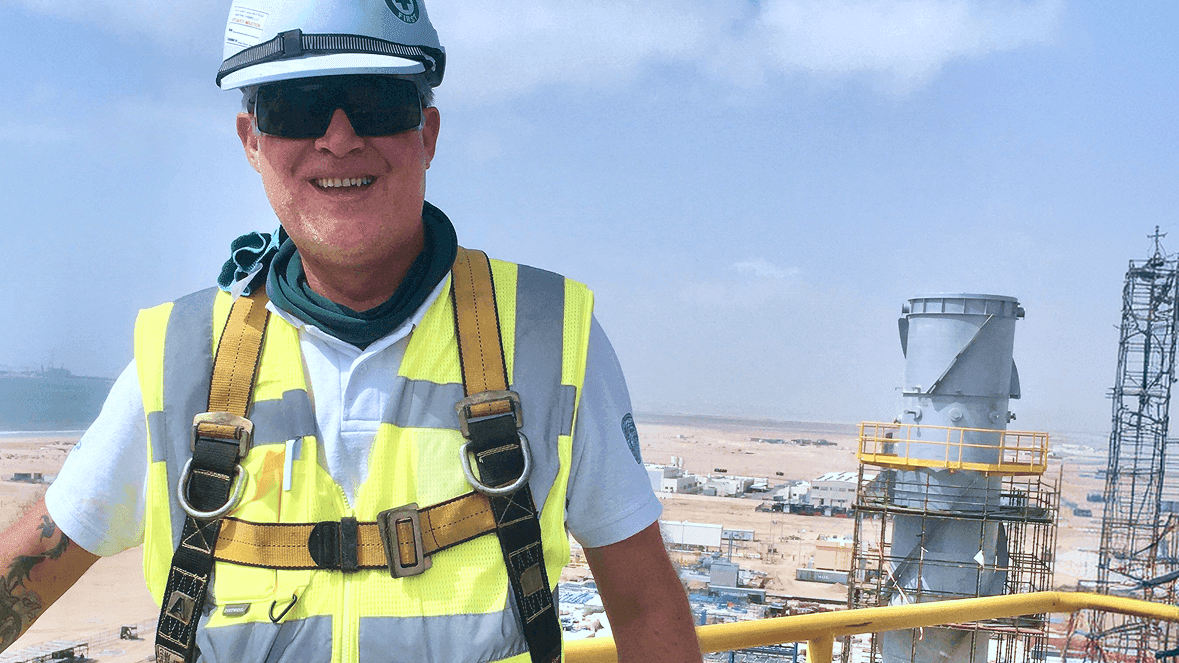
Q: What is the most unexpected thing the job has taught you?
Earlier in my career I believed that if you got the technical process right, the procedures, the risk assessments, the permit systems, the training etc., then the right outcomes would follow. What thirty-five years has taught me is that the technical framework is necessary but nowhere near sufficient on its own. The thing that actually determines whether people go home safe is human behavior, and human behavior is shaped by culture, leadership, and trust far more than it is by documentation.
The biggest lesson has been how much of this job is about people in the most fundamental sense. Understanding what is really going on beneath the surface of what someone is telling you. Recognizing when a workforce is genuinely engaged with safety and when they are simply performing compliance for the benefit of whoever is watching. Those are not skills that normally appear in an HSE qualification framework, but they are arguably the most important ones I have seen being developed.
The other thing the job has taught me is humility. The more experience you accumulate, the more aware you become of how much can still go wrong, how quickly, and how unexpectedly. Complacency is the one thing none of us can afford, and the incidents that have stayed with me longest are not the ones that happened because nobody cared, they are the ones that happened on days when everyone thought they had it covered.
That keeps you honest. And in this industry, honest is exactly what you have to be.


Keep Exploring

Leadership Perspectives on Skills, Trust, and the Future of Learning

Retail Isn’t Short on People, It’s Short on Trust