

Leadership Perspectives on Skills, Trust, and the Future of Learning
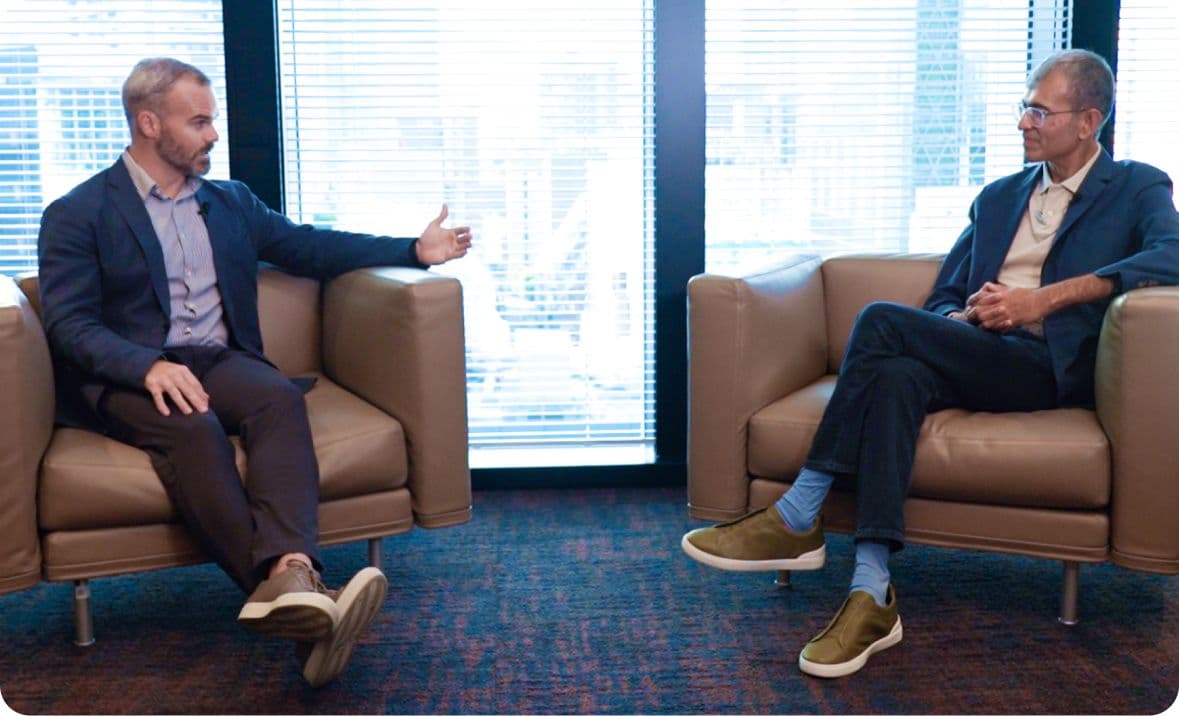
Oct 19 2026Tim Toomey is the Americas Lead at Accenture LearnVantage, Accenture's AI and technology upskilling platform. His career has been focused on equipping people with the skills they need to remain competitive in a rapidly changing economy.
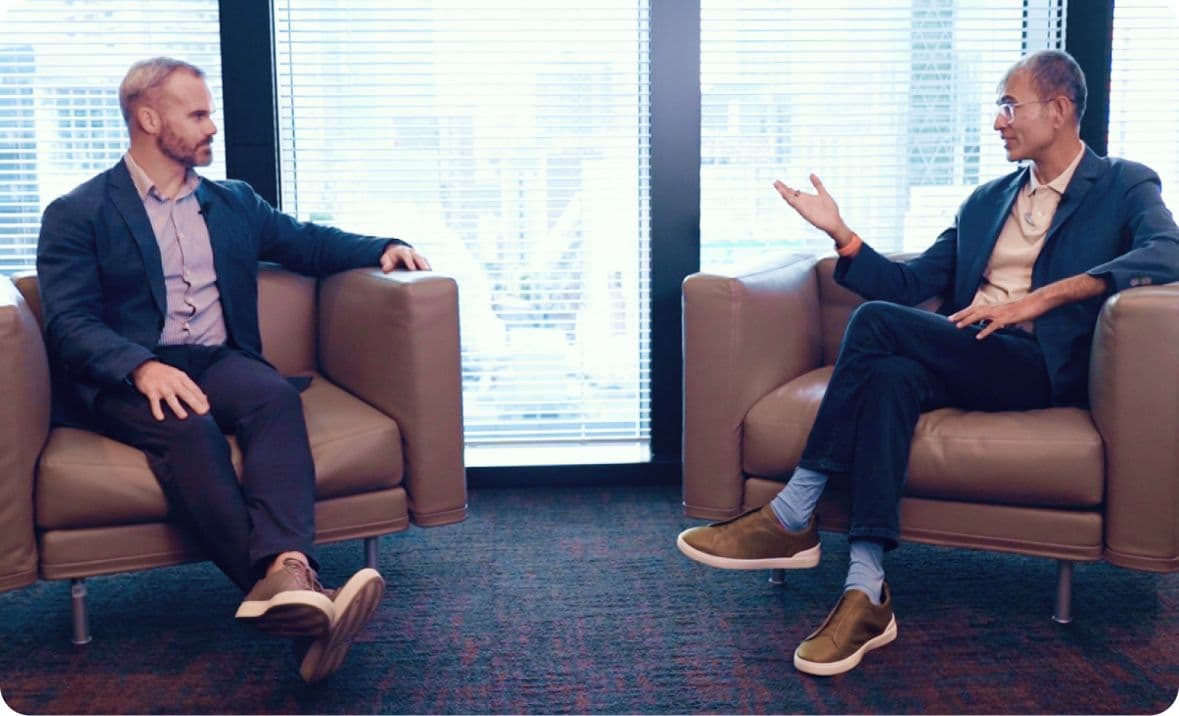
Tejas Patel is UWI Executive and Founding member and also Managing Director, Technology, Strategy & Advisory, Growth Markets Lead at Accenture. In this conversation he speaks with Tim about the future of work, AI's impact on hiring and skills, the role of verifiable credentials, and UWI's place in building a more transparent and equitable skills economy.
Watch the Highlights From the Conversation

Want the full conversation? Watch the interview at the bottom of this page.
Background and Beginnings
Tejas R. Patel: So, your career, where you started. I've read that you've been a founder, and what's interesting is you've done a lot in that space, but you've continued to remain in the people business, in skills. I'm just curious, it seems like across multiple businesses as a founder, your focus has consistently been on human capital, training, and skill building. So I'm keen to learn more about that.
Tim Toomey: Absolutely. And, you know, I've had the pleasure of working with many founders. I was part of the private equity group that bought a bunch of companies, so I never founded the company myself. But helped establish Ascendient Learning out of three really wonderful founder-led businesses that each had been in the training and education space for over 20 years. And so had the privilege of being able to bring those groups together into what became Ascendient Learning, and that eventually became one of the companies that makes up LearnVantage today.
But I've had a very nontraditional career, so I actually served in the Marine Corps in the infantry. I served for seven years. Had the privilege of being out with a couple of operational units and then coming back to be an instructor at the basic school in Quantico, Virginia. So got to teach, kind of got addicted to the ability to help change people, you know, give them the skills they need to be successful in their jobs and create opportunity for them in the future. And I really fell in love with that, and then when I had the ability to come back as a private equity operating executive, for me it seemed like a great fit.
And now as part of LearnVantage, having the ability to, you know, do that at scale and really make, I think, an impact that a small company never could have had for me has been just, you know, a joy. So that's the reason why I'm here, and that's why I really love the work that we're doing at LearnVantage.
Passion and Purpose
Tejas R. Patel: That's great. So Marine Corps, you know, you help establish a company, set it up, scale it. You've gone now to another bigger scale with LearnVantage. But at any point, did you feel like you wanted to do something different? Because what I've learned or what I've been told is that teaching is hard. Learning might be easy, but teaching is hard. And what you've done is also kind of make that more easy and accessible and that skill building. So have you ever had a thought that I probably should be doing something different?
Tim Toomey: You know, there have been many opportunities for me to do a lot of different things. I think for me, importantly, not just, you know, kind of the work that I get to do and the people I get to be around, but the impact I get to have is something that's really important for me to believe in. And when I look at the things that I've enjoyed the most in my life, it's been being able to have an impact on people and feeling like I was able to help them achieve more as their family, you know, for their families or for themselves.
In the Marine Corps, you have the chance to work with people from a very diverse set of backgrounds. And I think, for me, the most satisfaction that I got in that job was helping people from very underprivileged backgrounds and communities, you know, in some cases, build the self-respect that they never had before, or be able to go to school for the first time and then really, you know, change the trajectory of their lives.
And so when I came into the private sector, I was always looking for what that thing was. You know, initially went to a public policy background thinking that that's what I wanted to go into, but then had the opportunity to look at the private sector, realize the impact it could have here. And so I think when I had the opportunity to come into Ascendient Learning and build a business that's all around equipping people with the skills that needed to be competitive to continue to grow their careers and provide for their families, that, for me, was kind of the perfect fit for, you know, what I was looking for outside the military.
Rebuilding Trust in the Age of AI
Tejas R. Patel: That's fantastic, and this is great. Now, I look at Ascendient, and a lot of what you've been doing is around technology skills, right? And obviously, at Accenture we say every business is a technology business, and as a result, if every business is a technology business, you need to have technology skills. But given the pace of change, how fast technology is moving, what do people need to do today from a skill-building standpoint? And how does hiring evolve alongside that? I know it's maybe a couple of different things, but I'm curious what's going to get individuals hired. What do they need to build as a portfolio of capabilities and skills to show up in a way that's differentiated, so an organization wants to bring them on?
Tim Toomey: You know, I'll get up on my soapbox here for a second. I actually think this is one of the biggest social challenges that we're facing as a society right now. Technology is changing so quickly and changing aspects of the economy that people previously thought were forever going to be the way that they were. It's really making us fundamentally look at the way in which work is done in a completely different light.
And for a lot of people trying to navigate that change, it's a very daunting challenge. In a lot of ways, I compare it to my own experience coming out of the military where you have a set of skills that you thought were the only ones you would ever need, and then all of a sudden you go through a dramatic shift and you end up in a completely new world where, you know, the kind of work you're expected to do, the terminology that's being used is completely different. It's a very jarring and unsettling experience.
And so as people look to evolve into, you know, the roles that AI will require them to be able to do, I think everyone's going to need a basic level of technology literacy that previously wasn't required. Unless you're a computer programmer, you didn't really need to worry about anything on the back end. You didn't really have to worry about how technology was changing things, and all of a sudden that's very different. You have to learn how to interact with AI agents. You have to learn a new way of working that requires you to delegate things to a set of technologies that maybe people don't understand or are uncomfortable with.
And so as we start to look into how the workforce needs to change, there's kind of two paths we have to choose from. I think there's one path in which we continue down the road that we are right now, and you see the distrust building up within society around technology, the way it's being used in hiring, how it's changing jobs, and it's really starting to get this large public backlash against many of these technologies that are coming out because people feel like the same opportunity that they were able to have when they were growing up and moving into the workforce is not going to be there anymore, and potentially it's not going to be there for their kids either. When we think about the promise that any society needs to be able to give to its citizens, it's that if you work hard enough, if you're able to educate yourself, and if you apply it yourself, your kids will be better off than you are in the future. And that seems to be disappearing right now.
So that's kind of the path that I think we are in danger of going down, and I think the alternative to that is we build a lot more transparency within the entire economy. That requires us to, first of all, identify what skills people need to be hired, so it means that we have to look at jobs and look at the role of work, and we examine how those things are changing in the age of AI. We then need to create a transparent process to hire people based on what they're actually capable of doing, which requires us to look at how we identify skills and credentialize skills, and then create a verifiable trust layer between the person who's hiring for those roles and the people that are seeking those jobs.
And what we want to do is eventually create a system where people understand what skills are required for each role that's coming up. They have a transparent and verifiable way of applying for those jobs that doesn't rely on having some insider access or creating some sort of AI-generated resume that misrepresents your background, and also gives them a very clear path. If I want to be able to do this work in the future, these are the things I need to do to get there.
We're not there right now, but I think some of the things that we're doing with the Universal Wallet Infrastructure project, with NTT DoCoMo, with what I think Accenture is trying to do broadly within the age of reinvention for these companies is designed to get us down that better path. And that's another one of the reasons why I'm very passionate about the work we do here at LearnVantage and the partnership that we have with UWI.
The Human Edge
Tejas R. Patel: That's great, and thanks for that. There's obviously a lot to unpack there, because AI is rewriting some of the rules. That's happening. There are going to be new roles, new jobs, new technologies that people have to learn. But by hypothesis, there's still going to be job creation, it's just going to require new skills. The rate of change is high, the pace of technology is fast, so keeping up is going to be important. And then there's the trust layer you talked about, a whole new way of transacting and interacting, the portability of credentials and how you prove them. The trust aspect becomes even more critical in the age of AI.
I think that's all great, but tell me your thoughts on this. There's quite a lot of narrative out there that knowledge work, for the first time, is under threat, that a lot of it can be done by AI, and that AI is going to get better and smarter. While there will be job creation around it, do you believe we can truly create a whole new category of jobs? Will there be new things that need to be done, requiring new capabilities and skills? Or does AI just learn those too, until that job also gets automated or handled by agents? Or does this give every individual the ability to be more of an entrepreneur, more of a creator? How do you see it?
Tim Toomey: So I think, you know, undeniably AI will have an impact on certain types of work that is being done. You know, it has the ability to do a lot of the rote work that a lot of workers typically will engage in for at least 50% of their time. So if you think about trying to build out a model or trying to do what I did when I was a new consultant, you know, building a very pretty PowerPoint deck and aligning everything, you know, that kind of work is no longer going to be necessary, and that can be daunting at times.
But I think if we look at, you know, the promise of AI, what it can do is it can free people from all of that rote work that they used to do and really allow them to spend more of their time doing the things that humans are inherently better at. The creativity, the judgment, the discernment, the decision-making that you cannot delegate to an AI agent. Ultimately, right, the responsibility for a decision that's being made has to be held by a human, it can't be held by a machine.
And when we look at the way in which our clients are incorporating AI, you know, I kind of separate out the two options that people have into, you know, the clients that want to reinvent themselves in the age of AI and the ones that decide to digitize their company. And when we look at that dichotomy, the digitizers are basically, you know, the story goes something like this. A CEO decides that he or she is going to implement an AI technology within their company, they make a massive investment in that, and then they spend no time or money or thought towards enabling their people to execute a strategy. And this is something that we've seen again and again. You know, people don't really understand what AI is supposed to do, and so they throw a bunch of different models at people and just hope that they'll figure it out on their own without a clear strategy or guidance or anything else.
Now, at the ground level, there will be a few superusers, but for the most part, people won't really understand what the tools are going to be used for. They will use them inaccurately or they'll use them too much for things that they shouldn't, you know, that they don't need to use AI for. And so the costs in the company will actually skyrocket instead of delivering this promised productivity. And so what happens, a couple of quarters go by, the board comes to the CEO and says, you've made this massive investment, all I've seen is costs go up, where is the return on investment? And so the CEO goes back, starts to digitize certain roles because that's the easiest lever to pull, and all of a sudden, you've hollowed out the middle of the company.
And what are you losing in that case? Maybe AI can do that role, but you're losing the institutional knowledge that those workers used to have. And you're also losing, I think, a lot of the people that will grow into management positions and become those decision makers in the future. And so you're eating your future by digitizing.
And an interesting, I think, thought that our Chief Learning Officer, Professor Majd, brings up often is when you think about what the capabilities of these models are all moving towards, you're seeing a convergence in terms of the capabilities. In the future, there probably will not be that much of a difference between the most powerful models that are out there, and most humans will have access to all of them. And if we think about a company's competitive advantage as being a combination of its technology and its people, if the technology's all the same, then your competitive advantage is going to come down to the capabilities of your people. And if you've digitized your company, you've eliminated that as part of your suite of advantages.
Now, on the other side, we have the re-inventors who are really looking at the way in which this can transform everybody's ability to add more discernment and judgment and decision-making to what their company is capable of achieving. And maybe there are certain roles that you could fully automate if you wanted to, but we have to look at those entry-level positions now as almost apprenticeship programs. We need to be able to grow people and teach them how to use these tools responsibly and have a strategy that people are enabled to understand and be able to provide guidance around how these tools are being used to really unlock the new potential.
And so that is what we try to train our clients in, is you have to have a clear strategy, a use case, that people understand and believe in. And you have to preserve some of those entry-level roles to be training pipelines, to be able to grow the talent of the future, to continue to allow your company to be competitive. And so although I do think AI will have an impact on jobs, it's really a corporate decision on what that impact is. Do I want to use this tool to just decrease my opex and increase my earnings, which is a short-term lever with a lot of long-term implications? Or do I want to leverage the actual promise of this technology to allow people to be more creative and to use all of the experience and judgment that they've developed over the years to grow the company into something it's never been before?
Future of Work
Tejas R. Patel: Okay, very interesting. And how do you believe that the workforce of the future and how enterprises procure talent or retain and attract and also think through this is going to be less employees but more gig workforce? And then I keep hearing from a lot of the education industry on micro-learnings and there's going to be a lot more short-learning courses that even maybe the college system changes a little bit. How do you see that work out?
Tim Toomey: My own perspective is that the idea of having an organizational chart where people are aligned to a single role that's a very clearly defined job description is probably a thing of the past. Technology is changing so quickly. The work that is required is changing so quickly that trying to tie somebody to that individual job description is something that is going to be irrelevant within three weeks after you finish writing.
And so in the future, instead of looking at people as being one person aligned to this one type of role, what we should be looking at people at our organizational chart instead is through the lens of skill fluidity and skill density. What types of tasks and what kinds of experiences does this person bring to bear on a certain type of problem set and how can that change over time? And so that might be more gig workers, but also it might just be a pool of employees that are moving around and being able to shift similar to the way that a consulting company would work to apply their skills to different tasks as the needs of the business change.
And so in that kind of an environment, you need to have a very clear understanding of what your people are capable of doing and be able to identify the gap between what they currently know and what they're going to need to do in the future and be able to quickly upskill them to be able to meet that demand. And that's where a lot of, again, the work that we are doing comes into play. We want to be able to give skills intelligence to businesses so they understand what their people are actually capable of. And as technology evolves and as the needs of the business evolve, we can quickly help to upskill them into the kinds of positions or the kinds of skills that they're going to need to be able to execute the work that's required.
Transparent Hiring with UWI
Tejas R. Patel: Okay. No, I think that's great. And clearly a lot of food for thought. I mean, you know, you've been thinking about this, you're having conversations, obviously, and I like the two sort of archetypes of enterprises on how they think about technology and AI and how they are either digitizing or reinventing. And arguably a lot of the organizations to date have been digitizing. And now the sort of reinvention, especially with AI coming through, is you've got to really re-look at this and really truly enable your people. So thanks for that, Tim.
Now, you know, going back to UWI, you talked about a trust layer, skills, credentials. How do you see that coming together? And what I mean by that is today a lot of our skills and our credentials are tied to the workplace that we work at. You know, I might take the training. Obviously my employer probably is paying for my training. I'm taking it and I get certified by whether it's a cloud certification or I'm a database administrator. I get the credentials, the skill is there. And when I go back and if I decide to go pursue another opportunity, likely I can put on my resume, I've got these skills and credentials. Maybe I want them in my LinkedIn. I've got this badge that's there.
But how does the enterprise really trust? And especially now with the AI, can they trust that? They might interview me and you probably have these skills. But is there a better way to do it? And UWI as a trust layer, how do you see these credential issuers, the folks or what we call the wallet holders, and the verifiers coming together? Because it is a change. We understand it's going to be needed. So how do you see that ecosystem forming? And what gets you excited with this? Is it truly going to be something that it's going to be needed? Or is it just nice to have?
Tim Toomey: So I'll start off at a high level, and then I'd like to end with a personal story because I think it kind of brings home the point of why this is such an important problem to solve. I think at a high level, the way in which we traditionally hired is that we looked for certain signals within a resume to be able to indicate that somebody had the requisite skills or at least the capability to learn the skills that they would need on the job. So we would look at a university degree or we would look at experience within a resume, and we would try to infer what that person's capability set was. But it didn't really tell us what they were exactly able to do. Again, we had to make that inference and then use that to pull them into an interview process where we dug in more. Maybe we used a case study. All this was incredibly labor-intensive, and it's really hard to separate, I think, the wheat from the chaff.
In a lot of cases, qualified candidates who didn't have the requisite experience or the connections or the ability to go to a top-tier school ended up losing out in that process because they weren't able to properly demonstrate what they were capable of, and so it creates this very inequitable hiring process.
Now, AIs make that problem worse because now we are starting to use those tools to actually screen resumes, and on the other side, we have candidates that are using AI to create resumes, potentially misrepresenting information to try to become more competitive, to get picked out of the pile. And so there's this arms race between the hiring manager that's trying desperately to find qualified candidates and the applicants to try to be picked out of the pile or put the right keywords in to get picked out by AI. And so what happens is I put out a job description, which, as I've already covered, is probably going to be irrelevant in three months. I get 5,000 AI-submitted resumes. I'm immediately overwhelmed as a hiring manager, and so I go back to the traditional ways of hiring, which is who do I know and who do I trust?
And so the inequity of that system actually is compounded by AI in that case because we can't trust the technology and we can't trust the signals that we can get. And when we talk again about what that does to society, people don't feel like they have a chance anymore and they feel like the system is being rigged against them. And so even though there's this desire to try to bring the best qualified candidates to the forefront, the technology is actually making it harder in this case.
And a personal story I'll tell you is I have a good friend of mine who I served with in the Marines who reached out to me a couple of months ago about this exact problem. Now, this is a guy who served for four years in the infantry and then became a police officer and then ended up selling medical devices when he served a family because he wanted to provide a better life for his kids. And after about two or three years, again, he reached out to me two months ago and said, look, I can kind of feel the layoff coming. I know that the device that I'm selling right now is becoming outmoded. I really want to transfer into this other related industry that I know I'm capable of doing.
But I'm incredibly frustrated. He said, first of all, AI is changing the game and I don't understand the technology. I don't understand how it's changing sales. I haven't ever gotten the training to be able to actually incorporate that into my daily life. And furthermore, when I'm applying for these jobs, he said, I feel like I'm just sending out thousands and thousands of resumes and I can't get through the AI screener. He's like, I feel like I don't even have a chance at getting a shot. He's like, I know that I can do this job, but I just feel this despair and I don't know how I'm going to provide for my kids.
And, you know, I tell that story because, to me, that's the death of the American dream. When somebody who is a hard worker, who's built himself up, who's a veteran, who cares deeply about his family, doesn't feel like he can even get a chance, get a foot in the door to be able to prove himself, we're failing, right? And so what we have to do is, again, build something that allows for transparency in the process that actually quantifies people and what they're capable of and not how well they can write a prompt.
And also to be able to provide a transparent, I think, path for somebody who is unqualified for a job to get the skill they need to become qualified. And that's where I think the work that we're doing with UWI comes in. What we want to do is, first of all, break down a person's experience and background into a set of verifiable skills. Either that's going to be through training with some company like LearnVantage, or it's going to be by looking at their experience, but it has to be embedded into something that is secure and owned by the individual and trusted.
And then from the employer perspective, we want to move away from that set of job description and instead look at the skills that you're trying to hire and say, hey, prove to me that you have these 13 different skills that are going to be required for the job. And now instead of having this completely, almost pro forma process now where the two AI agents fight each other and see which one can optimize better, we have a process through which people can say, prove to me you have these 13 skills. There's a verifiable credential that is now applied to each one of those skills, and if you're not qualified for that, now I know. Here are the three skills I need to get to be competitive for this job. I can go out and get training, and I can make myself competitive for that.
And that's the kind of ecosystem, the economy that we need to build in order to, number one, help our clients navigate this change and have access to the best possible talent, but more importantly, from my opinion, help society navigate this monumental change that's going to be incredibly disruptive for a lot of people that have relied on certain things not changing for a long time. And so that's, again, when you ask me why have I stayed in this job here, it's because I can see the role that Accenture has to play in navigating that change, and that's the thing that I believe in that I think might be the most important work that any of us end up working on.
Your Skills. Your Asset.
Tejas R. Patel: Gotcha. And obviously, since you're running LearnVantage for the U.S., how do you see the states and different authorities thinking about skilling and credentials? And on regulations or policies, because I think you mentioned you spend a lot of time at the Capitol as well, are there new ways of thinking through the problem, new problems emerging, and new ways to solve them by leveraging credentials and skilling, and making them portable and available? Because in the examples we were sharing, I get the credential or skill and I can hold it, but the data often still sits with the organization I'm at, and if I leave, it stays there. Some of it can be made available, but it becomes hard. Are you seeing regulations that could allow for a much more equitable society, with the different players and policies to support that?
Tim Toomey: I think this is one of the areas where there is broad bipartisan consensus that this is an issue that we have to get ahead of. I think lawmakers are looking to industry to try to figure out what the solution for that is. But when we look at a lot of the state-funded programs that are looking to upskill workers, there are a couple of requirements that seem to be universal. One is that there is a credential that a worker is able to obtain after they do a reskilling program that is broadly recognized and that can show that worker's capability in terms of doing something else. The intent is for someone to have a certification and that to be used in the hiring process to prove that skill.
I think the second is that, whereas before you mentioned if I get training at Accenture, there's no record of that training that follows me, I think now a lot of states and the federal government are starting to recognize that that data needs to be held by the individual. So if I'm going to go through the effort of trying to skill somebody and fund that through the federal government, I don't want that to be held by a hyperscaler or a certain private company. I want that to be something that the individual can continue to have going forward.
And in the future, I think there's going to be a recognition that companies have a responsibility to take workers and actually leave them better off than they were when they first took them in. I have a corporate responsibility to take care of my people, even if it means that they move on from there. And so I think in the future, there will be at some point a recognition that companies have to be able to certify what those workers are capable of in a way that allows them to take those skills elsewhere if they decide to move on.
And so that is a broad change that we're starting to see. I think there is regulation that's being discussed, but, you know, and when I talk to a lot of companies, the question that I get a lot of times is, well, what if we train someone and then they want to leave? What happens there? And my answer to them would be the same answer that my dad used to give me when I was a kid and there's something I didn't want to do. He said you can either do this the easy way or the hard way. Either we as the private industry can come up with a solution for this and recognize that upskilling people and giving them upward mobility is going to be good for all of us, or we can wait until there's the inevitable public backlash and this is forced on everyone's throat. But it will happen at some point. It's not a matter of if. In my opinion, it's a matter of when.
Same Rules for Humans and Agents
Tejas R. Patel: Got it, got it. Okay, this is great, and thank you. I've got one last question for you, and it's probably a bit left field. Agentic is here, and it's going to continue. The next billion on the internet are going to be agents. How do you see agents acting on behalf of humans, probably doing the work that humans would do? And how do you see skilling and learning applying to agents, and the role of credentials in proving their capabilities? Because as organizations try to make agents available, and let's keep this within organizational boundaries for now, you might have an agent that does a particular task really well. But even within the same organization, when it's a sensitive area, we often need to be sure we can trust that's truly the case. So as agents are made available for broad access within an organization, how do you make sure, if I'm working in a sensitive area, that I can trust an agent genuinely has that capability and skill? Do you see a role here that expands beyond humans, applying credentials and proof to agents too?
Tim Toomey: Sure. I mean, I think in the future, if you think about the workforce being a mix of agents and humans, you have to look at agents the same way you would look at a human being. I would never bring somebody onto a project and expose them to a client unless I was kind of sure of what that person was capable of, unless I interviewed them and vetted them.
And right now, as we look at the plethora of agents that are out there, it's very hard to discern which ones are valid, which ones have been vetted by the appropriate authorities, and which ones somebody coded in their basement on a weekend and then just let out into the world. And so as we start to look at more and more specialized agents that are designed to attack certain types of problems, we have to also have that same trust layer that we would for a human being to understand, yes, when this description of this agent says it can do X, Y, and Z, that it actually has an authority standing behind it. That's been vetted by Accenture Security. That's gone through some expert reviews, and this agent's actually capable of doing this kind of work, and you can trust it in a client environment.
And so we have to provide that same level of visibility into the skills and into the veracity of those skills that we would for any human worker. And I do believe that in the future, we're going to see more and more of that blended work. We already are in a lot of the startup world. We're going to start seeing that come into major corporations. And unlike in the startup world, there's higher stakes when you talk about a company like Accenture and the sensitivity of the data we expose it to.
And so if there's not that trust backstopping the way in which those agents are being deployed, that poses a real challenge for the impact that they can have on the work that we're looking for, which again comes back to the idea that if we're making these investments, we have to see the return. Unless you have this trust layer, it's very difficult to get there.
Watch the Full Interview Here


Keep Exploring
Frontline Perspectives on Heavy Industry with Alexander Diack
Retail Isn’t Short on People, It’s Short on Trust