


Executive Perspectives: Building Trust in the Digital Economy
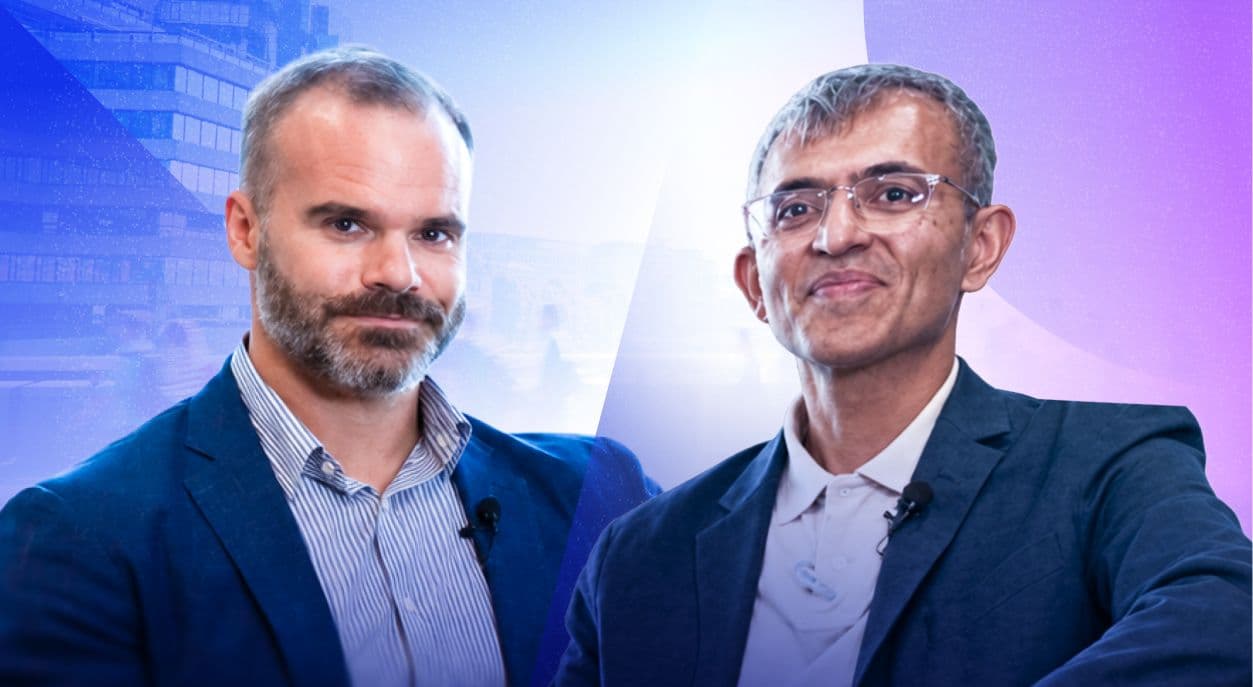
NTT DOCOMO GLOBAL CEO, Hiroki Kuriyama and Accenture Managing Director, Tejas Patel on regulatory momentum, legacy integration challenges, and the shift to user-centric digital experiences
Jan 9 2026Q: After years of discussion, digital trust infrastructure is moving from concept to deployment across industries. What's changed to make this the right moment?
Tejas Patel: Digital trust infrastructure is becoming a reality because three forces are converging. First, regulation and standards have matured, examples such as eIDAS 2.0, mDLs and the GENIUS ACT are no longer theoretical with some already mandatory and enforceable. Second, technology has evolved – tokenization, decentralized identity and verifiable credentials are now operational, not just pilots. Third, consumer expectations have shifted, with people wanting seamless, secure, and reusable digital experiences. Together, these forces have made the costs of breaches, fines, and lost trust a board-level concern, with reputational risk now directly tied to enterprise value. At the same time, they are driving enterprise adoption of multi-purpose digital wallets that connect identity, money, and assets, as organizations such as banks, telcos etc increasingly collaborate on shared infrastructure across ecosystems.
In short, trust has become the new currency of the digital economy. Without verifiable identity and user-controlled data, AI-driven experiences fail, as poor data quality and a lack of authenticity undermine them. This is precisely what Universal Wallet Infrastructure delivers: a user-centric foundation that unifies identity, money, and objects, enabling brands to create hyper-relevant, privacy-preserving experiences while earning the trust that will define long-term winners.
Hiroki Kuriyama: Societies benefiting from Web2 are now moving toward a new phase of digital infrastructure. The EU is developing laws and regulations for digital identity wallets. North America is preparing to implement digital IDs for public credentials. Both regions support technical standards such as eIDAS 2.0 and mDLs. This shift is driven by both regulatory momentum and increasing online fraud and compliance burdens. As these forces converge, the need for a unified, scalable solution becomes clear. That is where Universal Wallet Infrastructure (UWI) emerges as a foundation for secure personal data ownership and verified data sharing. This new infrastructure requires a new ecosystem, enabled through collaboration among application, device, and connectivity providers.

Q: Accenture works with enterprises implementing these systems. What's the biggest gap between the vision of trusted digital wallets and the reality of integrating them into legacy infrastructure?
Tejas Patel: The vision is compelling - one wallet, trusted everywhere, but the reality is more complex. Most enterprises run on decades-old systems stitched together with custom code. Plugging in digital wallets isn’t just an API call; it means untangling data silos, rethinking consent flows, and convincing multiple teams to change how they work.
Many organizations initially explore building wallets in-house. Expectations shift once they encounter the realities of ongoing regulatory updates, interoperability across ecosystems, and continuous standards alignment. These requirements quickly extend timelines and resource commitments beyond early estimates, highlighting why wallet infrastructure is rarely a one-time build.
At Accenture, we’ve seen success through a phased, partnership-led approach. Our foundation infrastructure lets enterprises move forward step by step while avoiding silos and the complexity of disconnected solutions. Strong ecosystem partnerships, like those behind UWI, provide the orchestration layer enterprises need, simplifying build, buy, and partner decisions and enabling seamless adoption across systems.
The result is faster progress today and a more sustainable foundation for trusted digital experiences at scale.
Q: NTT DOCOMO GLOBAL sits at the intersection of telecommunications, digital identity, and global markets. How does operating that infrastructure position you differently than pure-play tech companies in this space?
Hiroki Kuriyama: As part of the NTT group, NTT DOCOMO GLOBAL (NDG) has a strong foundation as a trusted social infrastructure provider, recognised by societies and governments globally. NDG is capable of integrating connectivity solutions such as Open RAN, digital identity, and a variety of mobile application services, creating a seamless ecosystem that drives collaboration and innovation.
Reachability, scalability, and security are core values of NDG’s offerings. NDG prioritises open standards over closed ecosystems as part of its DNA, ensuring the freedom to integrate and innovate with trust.

Q: Governments worldwide are moving at different speeds on digital identity regulation. How should global businesses navigate this fragmented landscape?
Hiroki Kuriyama: Digital ID regulations are advancing at varying rates across countries. However, since people frequently move and conduct transactions globally, interoperability for Universal Wallet Infrastructure (UWI) is essential. Meanwhile, businesses follow unique industry standards and require flexibility to meet specific local demands. NTT DOCOMO GLOBAL (NDG) sets interoperability as the center of its design principle.
The company offers a two-layer solution for UWI: one layer provides core functions suitable for common global requirements, while the other accommodates industry-specific or regional adaptations. NDG’s UWI is designed to accommodate open standards and diverse regulatory frameworks, balancing global standards with local compliance while ensuring compatibility across digital ID platforms.
Q: We've seen consumer trust in tech companies fluctuate wildly. When individuals can control their own credentials and data, does that fundamentally change the trust equation between users and service providers?
Tejas Patel: Absolutely, it flips the trust equation from “trust me with your data” to “trust me to operate on your terms.”
When businesses hoard personal data, they inherit risk - breaches, regulatory exposure, and mounting consent debt. User-controlled models swap that logic. Value comes from verified interactions, like proving age or eligibility, rather than from warehousing profiles.
Practically, that means they optimize for minimal, purpose-bound data - think verifying “over 21” or “certified professional” without seeing a home address or full certificate history and win loyalty because they don’t keep what they don’t need. Users’ expectations have shifted in parallel. People want convenience and hyper-relevance, but only when they can see what’s shared, with whom, and for how long. They will reward brands that make that transparent and revocable by design.
In the next digital era, relevance will be delivered without holding data, and trust will be earned without watching users.

Q: AI agents are increasingly acting on behalf of customers—booking services, making purchases, and managing accounts. How does digital trust infrastructure change what becomes possible in these AI-driven interactions?
Hiroki Kuriyama: As AI begins to act on behalf of customers (“AI Agent Economy”), making reservations, processing payments, and managing services, the need for verifiable authorization becomes critical. Unlike human interactions, these AI-driven engagements demand a new trust framework that ensures transparency and privacy. Digital trust infrastructure not only enables secure transactions but also protects personal data and delivers advanced personalization. This foundation makes possible what was not achievable before: AI agents can confidently execute tasks end-to-end, unlocking new business models and seamless customer experiences. With UWI, we provide a platform designed to meet diverse regulatory requirements, empowering AI to autonomously complete services and create transformative digital experiences.
Tejas Patel: In theory, AI delegation sounds effortless, but only works when trust moves from assumption to proof. What we’ve seen through decades of tech disruptions is that automation without proof creates risk, not value. Digital trust infrastructure makes that possible by giving AI agents verifiable identity, intent, and authorization without storing personal data. This unlocks an agent-driven economy where services can transact confidently, and users stay in control - sharing only what is needed, when it is needed, and for how long it is needed. The breakthrough? Privacy and personalization no longer compete; they coexist, enabling seamless, orchestrated experiences across brands and ecosystems.
Q: As you look toward 2026, what trends or developments in digital trust and identity should business leaders be watching?
Hiroki Kuriyama: Toward 2026, regulatory structures will advance, cyber fraud will be more sophisticated, decentralized IDs and verifiable credentials will become widespread, and new trust models integrated with AI will accelerate. These shifts signal that more enterprises should begin implementation rather than wait. UWI provides a foundation that meets regulatory requirements, enabling global enterprises to balance compliance and convenience while supporting new digital experiences.
In 2026, leveraging first-mover advantages, NDG’s UWI will realize secure data utilization and provide seamless identity authentication and credential verification. By 2027, we aim to advance AI-driven integration, creating personalized experiences across multiple services with greater convenience and reliability. Our vision is to support a new digital society through infrastructure built on open standards.
Tejas Patel: Heading into 2026, digital trust and identity will be shaped by new regulations, emerging standards, and evolving consumer expectations. Key developments include EU eIDAS 2.0 and MiCA compliance, along with U.S. updates such as NIST SP 800-634, which are setting global benchmarks for secure and interoperable identity. On the technology front, W3C Verifiable Credentials 2.0 and FIDO passkeys are accelerating the move toward passwordless authentication, while advances in privacy and security frameworks continue to strengthen trust. Business leaders should watch for regulatory timelines, rapid wallet adoption, and interoperability standards that will influence how digital ecosystems operate and compete.

Read more about our collaboration here: Link to Press Release


Keep Exploring
Leadership Perspectives on Skills, Trust, and the Future of Learning

Frontline Perspectives on Heavy Industry with Alexander Diack