

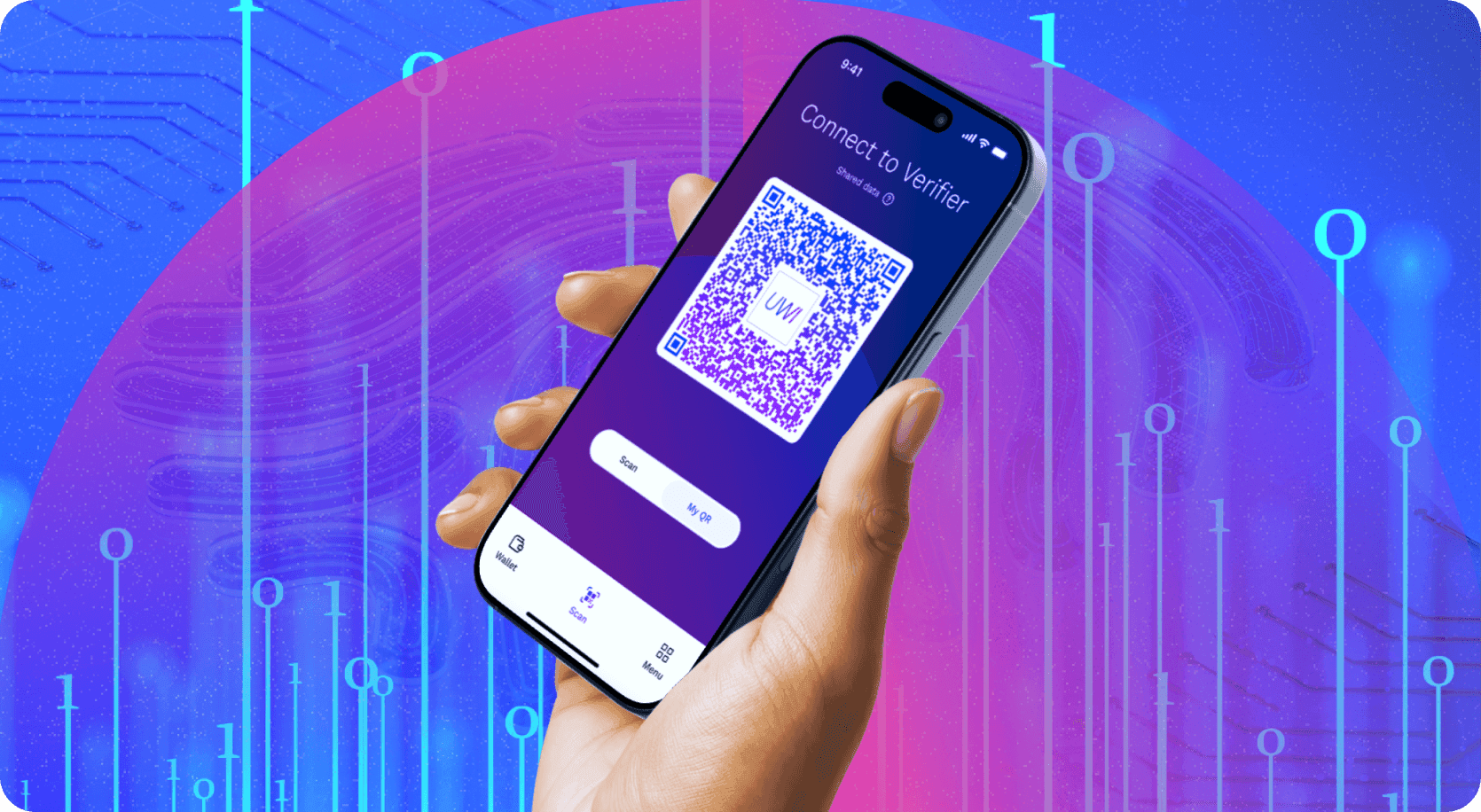
How UWI's New Release Solves Today's Identity Challenges
And Builds Tomorrow's Trust Layer
Aug 20 2025
Fraud is rising fast and regulations are tightening, yet the systems that verify identity — the foundation of every trusted interaction — remain fragmented, inefficient, and exposed to risk. Enterprises need faster, more secure, and scalable ways to establish trust.
Earlier this month, we introduced our new release to do exactly that. More than a feature update, it directly addresses today’s challenges — escalating fraud, tightening compliance requirements, and the demand for seamless digital interactions — while laying the foundation for tomorrow’s universal trust infrastructure, one that will ultimately enable trusted interactions across identity, money, and objects.
Need for Trusted Digital Identity
Three forces are reshaping how identity is established, verified, and trusted — and each one signals the need for a new approach:
AI-driven fraud is escalating. Deepfake-enabled attacks now occur every five minutes¹, and bots account for 80% of fraud attempts². Global cybercrime is projected to hit $10.5 trillion annually by 2025³. There's a need for real-time verification and proof-of-humanity at the point of entry — before bots and synthetic identities can transact.
Regulatory pressure is intensifying. Standards like eIDAS 2.0 and ISO/IEC 18013-5 are reshaping digital identity⁴ — from interoperability and wallet ecosystems to privacy-by-design. Compliance is no longer a checkbox; it’s a design principle. Enterprises require issuance and verification solutions that enable selective disclosure, compliance, and cross-border interoperability.
Digital experience is now a competitive differentiator. 90% of customers expect seamless onboarding, and 83% abandon sign-up if verification is too complex⁵. In a world of instant commerce and global platforms, identity friction isn’t just a UX issue — it’s a growth barrier. A solution gap exists for user-driven credentialing that integrates into existing journeys, enabling frictionless onboarding and privacy-preserving verification at scale.
How UWI Unlocks Value Today
Responding to these forces requires a new approach — one that supports privacy, compliance, and user experience without compromise. Our new release delivers on that through three core capabilities:
1. Fraud Prevention Through Proof of Humanity: Bots and synthetic identities overwhelm downstream detection systems, driving up fraud losses and operational costs. Our new release introduces proof-of-humanity credentials anchored to verified identity sources. These checks run in milliseconds, stopping bots and fake accounts at the entry point — without adding friction for legitimate users:
A social platform can stop bots at signup in milliseconds — before they pollute engagement metrics.
A payments provider can block synthetic identities before they transact, reducing fraud losses and chargebacks.
2. Age and Identity Verification for Compliance: Regulatory mandates require stronger verification, but manual checks slow onboarding and increase abandonment. We now enable attribute-level verification — proving “Over 18” or confirming residency instantly, without oversharing PII. APIs and SDKs embed this flow into existing journeys, reducing compliance risk while improving customer experience:
An online lender can verify age in seconds without exposing full identity data, reducing compliance risk and improving conversion.
A grocery chain can confirm age for alcohol purchases in seconds — without risking fines for fake IDs.
3. High-Trust Digital Access for Seamless Interactions: Remote onboarding and secure service delivery require fast, privacy-preserving verification that works across jurisdictions. The infrastructure supports standards-aligned credentials (ISO/IEC 18013-5 mobile IDs) that can be issued and verified instantly — enabling frictionless account setup and selective disclosure for privacy-first verification:
A financial services app can enable passwordless authentication using wallet-based credentials.
An e-commerce platform can verify identity for high-value transactions without exposing full PII.
Across these scenarios, the principle is the same: verifiable, privacy-preserving credentials that integrate directly into the systems you already run.
What UWI Enables
Our new release embeds verifiable identity directly into enterprise systems, providing credential issuance, verification, and lifecycle management through APIs and SDKs.
Issuance that’s instant and secure — Credentials are created from trusted sources, secured with biometric match and liveness, and stored privately at the device level. Issuers can suspend or revoke instantly from a console or via API.
Verification that’s fast and compliant — Only the attributes required are returned as cryptographically signed responses, reducing exposure and compliance risk. Revocation is real-time, ensuring trust signals stay fresh.
Integration that respects your stack — SDKs embed issuance and verification into mobile, web, and POS channels. APIs orchestrate business rules and surface trust signals without requiring core re-engineering.
Governance and security by design — Every exchange follows a privacy-first pattern: least data, shortest exposure, explicit consent. Credentials are tamper-evident, audit-ready, and backed by a hybrid model that combines device-level privacy with cloud resilience.
What Sets Us Apart
While other approaches often center on consumer wallets or isolated solutions, UWI takes an infrastructure-first path — built for enterprise scale and adaptability.
Infrastructure-first — Integrate credentials into systems you already run, with no dependence on consumer wallet adoption.
Hybrid architecture — Resilience and recovery without compromising device-level privacy.
Standards-led roadmap — Future-ready for ISO/IEC 18013-5 and beyond.
Together, these principles give enterprises control, compliance, and confidence.
Future-Proofing Enterprise Trust
Most importantly, UWI is designed for what comes next. The same infrastructure will support:
Expanded credential coverage without re-architecting — from individual identity to organizational credentials, verified attributes, and ecosystem-specific tokens.
Continuity and automation with cloud-hybrid wallets — delivering secure recovery, multi-device support, and privacy-preserving automation.
Interoperability at scale with trust registries — allowing issuers and verifiers to validate each other across networks, reducing fraud and ensuring compliance.
Agentic AI and autonomous ecosystems — where AI agents and connected devices authenticate and transact on verifiable trust signals without human intervention.
This roadmap reflects UWI’s commitment to establishing a universal trust layer enabling enterprises to transact digital identity, money, and objects across a unified infrastructure. Starting with digital identity today positions enterprises to seamlessly extend into value exchange and connected ecosystems tomorrow.
The Leadership Imperative
Trust layers are becoming as fundamental to digital business as payment rails or internet protocols. The question isn’t whether they’ll emerge — it’s whether your enterprise will help define them or adapt to them later.
Now is the time to lead. Start by embedding verifiable identity into the systems you already run — reducing compliance risk, stopping fraud at the source.
See UWI in action — request a demo today and discover how to future-proof your organization.
References
Deepfake-enabled attacks now occur every five minutes; document forgeries up 244% year-on-year Entrust. Deepfake attacks strike every five minutes amid 244% surge in digital document forgeries. Retrieved from [Link]
Bots account for 80% of fraud attempts Experian. The Fraud Attack Strategy Guide. Retrieved from [Link]
Global cybercrime projected to hit $10.5 trillion annually by 2025 World Economic Forum / Cybersecurity Ventures. Cybercrime damage costs to reach $10.5 trillion annually by 2025. Retrieved from [Link]
Regulatory standards shaping digital identity (eIDAS 2.0, ISO/IEC 18013-5) European Commission. eIDAS Regulation Overview. Retrieved from [Link]
90% of customers expect seamless onboarding; 83% abandon sign-up if verification is too complex Okta. Customer Identity Trends Report 2023. Retrieved from [Link]


Keep Exploring

Leadership Perspectives on Skills, Trust, and the Future of Learning

Frontline Perspectives on Heavy Industry with Alexander Diack